
Accounting across Canada
Accounting and Tax Guide for Kitchener Waterloo Businesses
Kitchener Waterloo companies should document the purpose of each project while work is current and keep grants and financing apart from revenue.
By HBT AccountingSources checked 7 min read
What the official Kitchener Waterloo data shows
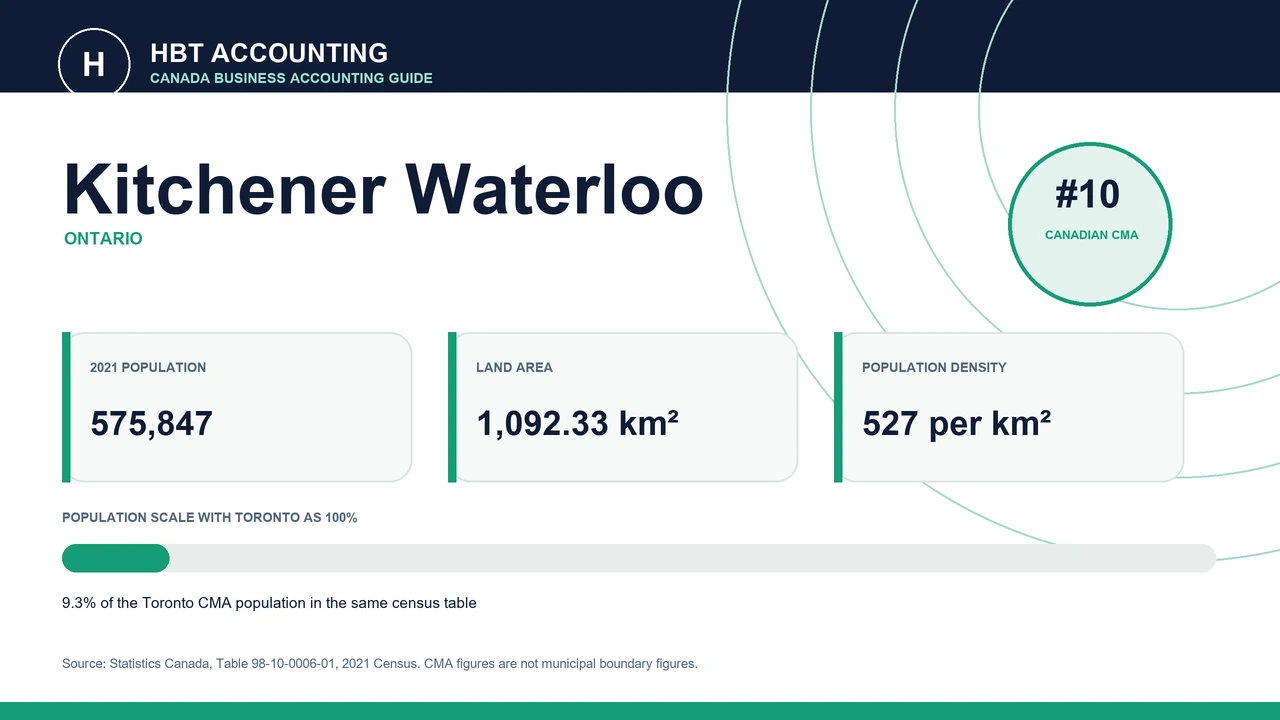
Statistics Canada ranked the Kitchener Cambridge Waterloo census metropolitan area number 10 among Canadian census metropolitan areas by 2021 population. The official table reports 575,847 people across 1,092.33 square kilometres. That is about 527 people per square kilometre.
| Measure | Result |
|---|---|
| Population | 575,847 |
| Land area | 1,092.33 km2 |
| Population density | 527 people per km2 |
| National CMA rank | Number 10 |
Key points
- Businesses in the Kitchener Waterloo region generally work within federal CRA programs, Ontario corporate rules, and the HST system. Companies with research activity, grants, equity transactions, or rapid hiring need records that preserve the purpose of each cost.
- Statistics Canada reported 575,847 people in the Kitchener Cambridge Waterloo census metropolitan area in the 2021 Census. This is census metropolitan area data, not a municipal population.
- HBT Accounting works from Calgary, Alberta and can discuss suitable remote engagements across Canada. This page does not represent a Kitchener Waterloo office.
Build the federal and Ontario reporting map
A growing company may use the same cloud subscription, employee, or contractor across several activities. The accounting policy should explain how costs are classified and who approves the evidence. The records should retain project descriptions, payroll support, contracts, funding agreements, and consistent cost allocations. For GST or HST, the applicable rate can depend on the supply and the CRA place of supply rules, not simply the city shown on the invoice. A separate provincial sales tax requires its own current provincial review.
A practical accounting focus for Kitchener Waterloo
The local example is technology and growth records that distinguish routine operations from research, financing, grants, and capital activity.
The decision focus is whether the records can support management reporting and any future incentive or financing review without recreating the history.
- Document project purpose while work is current
- Keep grant and financing transactions separate from revenue
- Retain payroll and contractor evidence by project
- Review capitalized and expensed costs consistently
Official sources
Call or email and we will tell you which records we need and what the work costs, in writing, before anything starts.
Important. This article provides general educational information, not legal or tax advice for a specific business. Rules, administrative policies, rates and deadlines can change. Confirm your facts and current obligations with the responsible government agency and a qualified adviser.